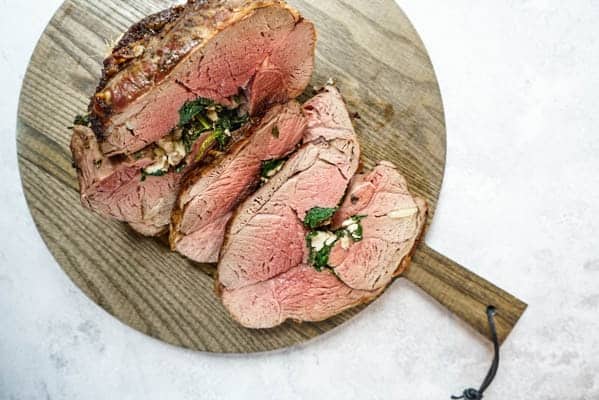
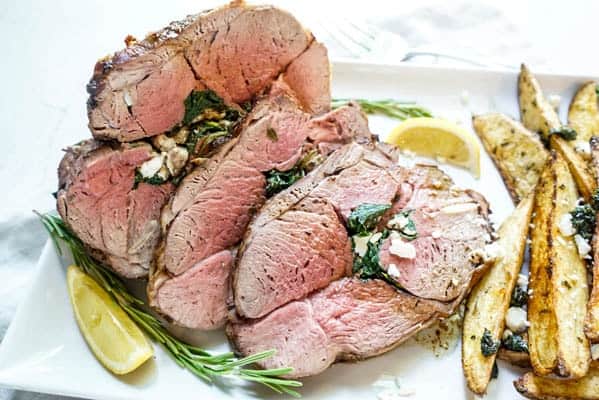
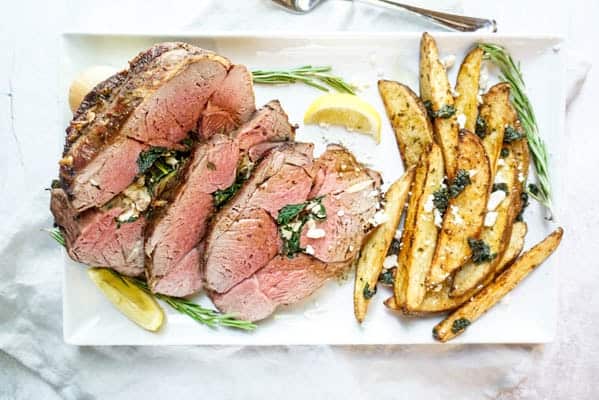
This spinach and feta stuffed Leg of Lamb is a show-stopping main course for your next holiday! Follow my tricks for a no-fail, perfectly cooked leg of lamb!
If you’re like me, the second that brisk fall weather hits, I’m thinking about my holiday menus. Lamb is a family favorite at the Dinner Fairy house, no matter how it’s prepared!
Cooking a stuffed lamb leg is a flavorful and impressive dish that brings together tender meat and a rich, savory filling. Whether you’re preparing a special meal for a family gathering or looking to elevate your weekend cooking, this recipe is sure to be a showstopper. The succulent lamb, infused with aromatic herbs and spices, pairs perfectly with the stuffing, which can be customized to your taste with ingredients like garlic, spinach, nuts, or even dried fruits! In this post, I’ll guide you through each step to create a stunning, restaurant-quality stuffed lamb leg in your own kitchen!
Why We Love this Stuffed Leg of Lamb Recipe
A stuffed leg of lamb is a perfect centerpiece for holiday meals because it combines elegance with hearty, comforting flavors that are ideal for special occasions. The lamb’s rich, savory taste pairs well with a variety of seasonal ingredients, making it easy to customize the stuffing to reflect the flavors of the holiday!
If you’ve never roasted a leg of lamb before, it may sound super intimidating. I promise it’s not. It’s one of the easiest cuts of meat to cook. It’s also the reason why my family loves to eat it on the eve of every holiday! My mom could throw this stuffed leg of lamb in the oven and prep all of the sides for the next day. Follow my fuss-free method of cooking a leg of lamb and it will turn out perfectly every time!
How do you choose the right leg of lamb?

Choosing the right leg of lamb is an important step in preparing a delicious stuffed lamb leg. Here are some tips to help you select the best one:
Bone-in vs. Boneless
- Bone-in: A bone-in leg of lamb offers more flavor and a beautiful presentation but requires more effort when carving. It’s a great option if you prefer a richer taste and don’t mind the extra work.
- Boneless: A boneless leg is easier to stuff, roll, and carve, making it more convenient for recipes like stuffed lamb leg. It’s often butterflied by the butcher, which saves time, and it’s easier to season and stuff evenly.
Weight and Size
- Choose a leg of lamb that fits the size of your gathering. A 5-7 pound boneless leg typically serves 6-8 people, while a bone-in leg weighing 7-9 pounds can serve around 8-10 guests.
- Keep in mind that the bone adds weight, so adjust the serving size accordingly if you opt for bone-in.
Quality and Freshness
- Look for lamb that is pinkish-red in color with fine marbling (thin streaks of fat throughout the meat). Avoid lamb that looks pale or grayish, as this may indicate older or less fresh meat.
- Freshness is key for a tender and flavorful lamb. Choose lamb with firm, springy meat that is moist but not too wet. If it has a strong, gamey smell, it may not be the freshest option.
Grass-fed vs. Grain-fed
- Grass-fed lamb typically has a more robust, earthy flavor and can be leaner. It’s considered more natural, but the flavor may be stronger, which some people love, while others may find it too gamey.
- Grain-fed lamb tends to be milder in flavor and has more marbling, making it juicier and richer. If you prefer a softer flavor, this may be the better choice.
Ask Your Butcher
- Don’t hesitate to ask your butcher for recommendations. They always help me pick the right cut, offer advice on cooking times, and even butterfly the leg for you, making it easier to stuff!
Should I marinate the lamb?
Marinades are the key to a super flavorful cut of meat. By just using a simple blend of ingredients, they work together to add flavor and moisture to almost anything! Ingredients like salt go beyond the surface of the meat and adding a whole new level of deliciousness to what you’re cooking.
In addition to lots of fresh herbs and garlic in my marinade, I always make sure to add an acid. Acids causes meats to be broken down, or tenderized. Salt works well in marinades for meat, too, because it helps break open the cells, allowing the marinade to get deep into the tissue.
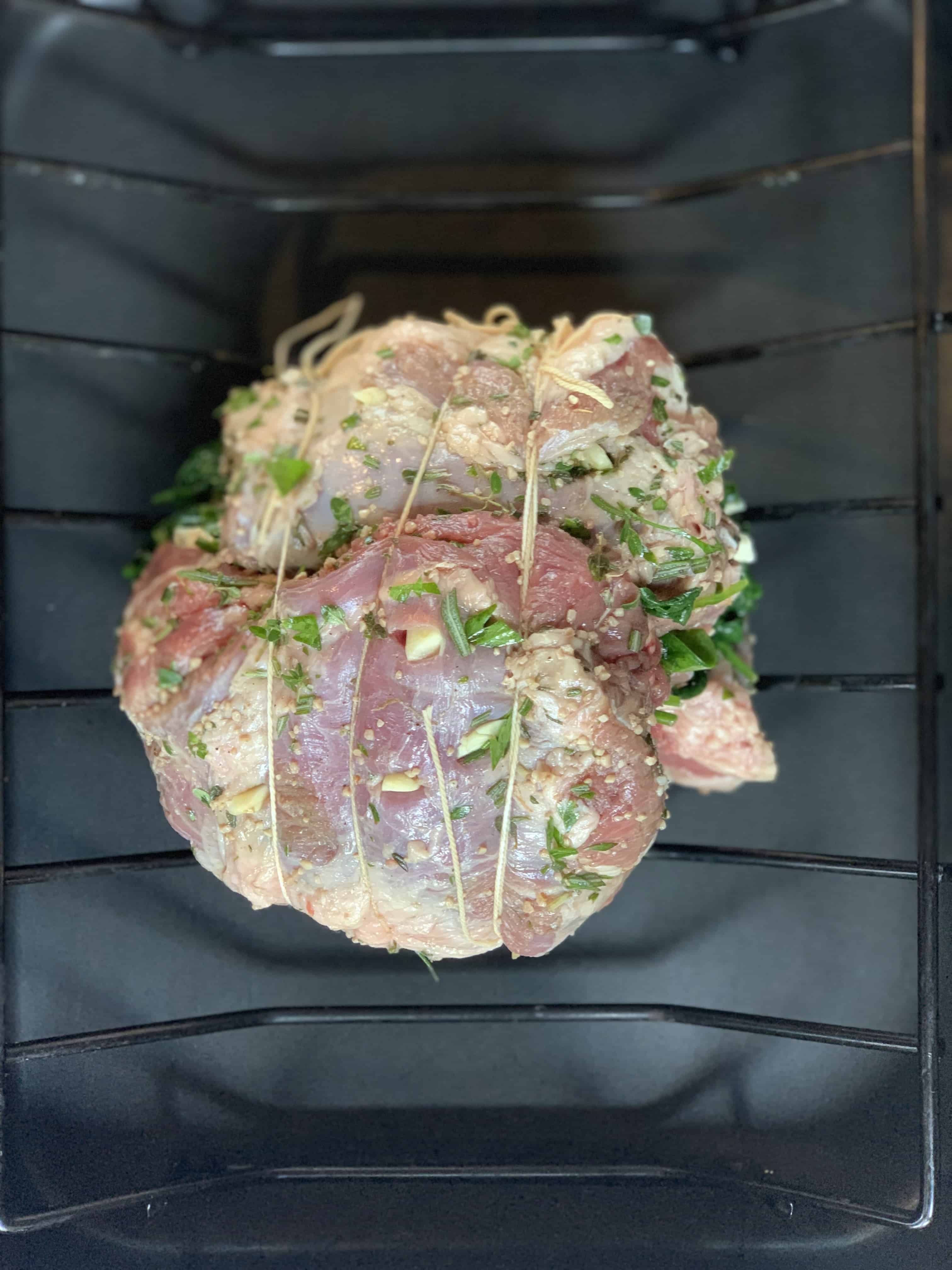
We’re marinading this boneless leg of lamb with lemon juice, lemon zest, rosemary, thyme, parsley, lots of garlic, salt, pepper, and olive oil. I marinated it overnight, but you can marinate for just 8 hours if you’re crunched for time.
Choosing the Stuffing
Choosing the right stuffing for a leg of lamb involves balancing flavors and textures that complement the rich, savory taste of the lamb. Here are some key considerations to help you select or create the perfect stuffing:
Herbs and Aromatics: Choose herbs that pair well with Lamb, like rosemary, thyme, parsley, and mint. Garlic is a must for adding depth and aroma. A simple herb-based stuffing keeps the flavors fresh and complements lamb’s natural taste without overwhelming it.
Adding acidity: Adding a touch of acidity to balance the lamb’s richness is key. You can incorporate lemon zest, a splash of balsamic vinegar, or tangy ingredients like sun-dried tomatoes. Acidity cuts through the fat, giving the dish a more complex and balanced flavor.
Adding texture: You can add crunch with bread crumbs or nuts, or add moisture with spinach and feta cheese. Be careful with ingredients like spinach. After cooking the spinach, drain any excess moisture to avoid making the stuffing too wet.

How to Tie Stuff and Tie the Lamb
Filling the Lamb
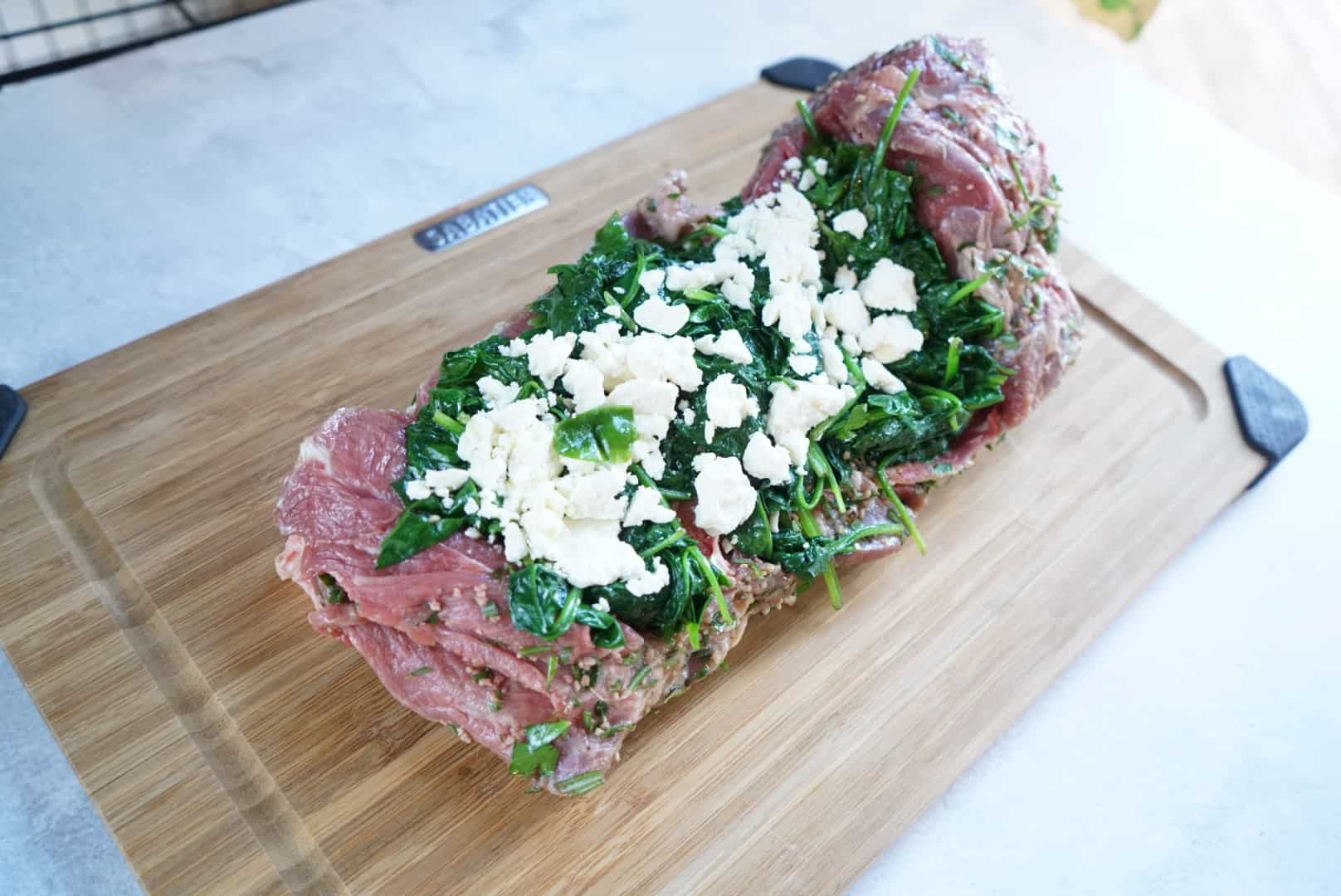
- Before adding the stuffing, make sure the lamb is butterflied evenly. If any part of the lamb is thicker than the rest, use a sharp knife to carefully slice into the thicker areas and open them up (but don’t cut all the way through). This helps the lamb cook uniformly and gives you a flat surface for the stuffing.
- Use your hands or a spatula: Once the lamb is laid out flat, take the prepared stuffing and place it in small amounts across the surface. Start with a few spoonfuls in the center, then use your hands or a spatula to gently spread the stuffing toward the edges, ensuring even coverage.
- Leave a border: When spreading the stuffing, leave a 1-inch border around the edges of the lamb. This makes it easier to roll the meat without the stuffing spilling out, and it helps the lamb seal properly when tied. Avoid overfilling the lamb, as it can make rolling and tying more difficult. Aim for a thin, consistent layer so the lamb can still roll tightly and cook evenly.
Rolling and Tying the Lamb
- Roll from the shorter side: Begin rolling the lamb from one of the shorter sides (not the long edge). This creates a more compact and evenly shaped roast. As you roll, tuck the stuffing inside and roll the meat tightly, but be careful not to squeeze too hard, or the stuffing might spill out. You want the lamb to hold its shape without the stuffing escaping.
- While rolling, keep an eye on any stuffing that may try to escape from the ends. You can tuck the edges of the lamb in slightly as you go to contain the filling. The goal is a compact, firm roll that will cook evenly.
- Once fully rolled, you need to secure the lamb with kitchen twine or kitchen string. Cut several pieces of twine (about 12 inches long each).
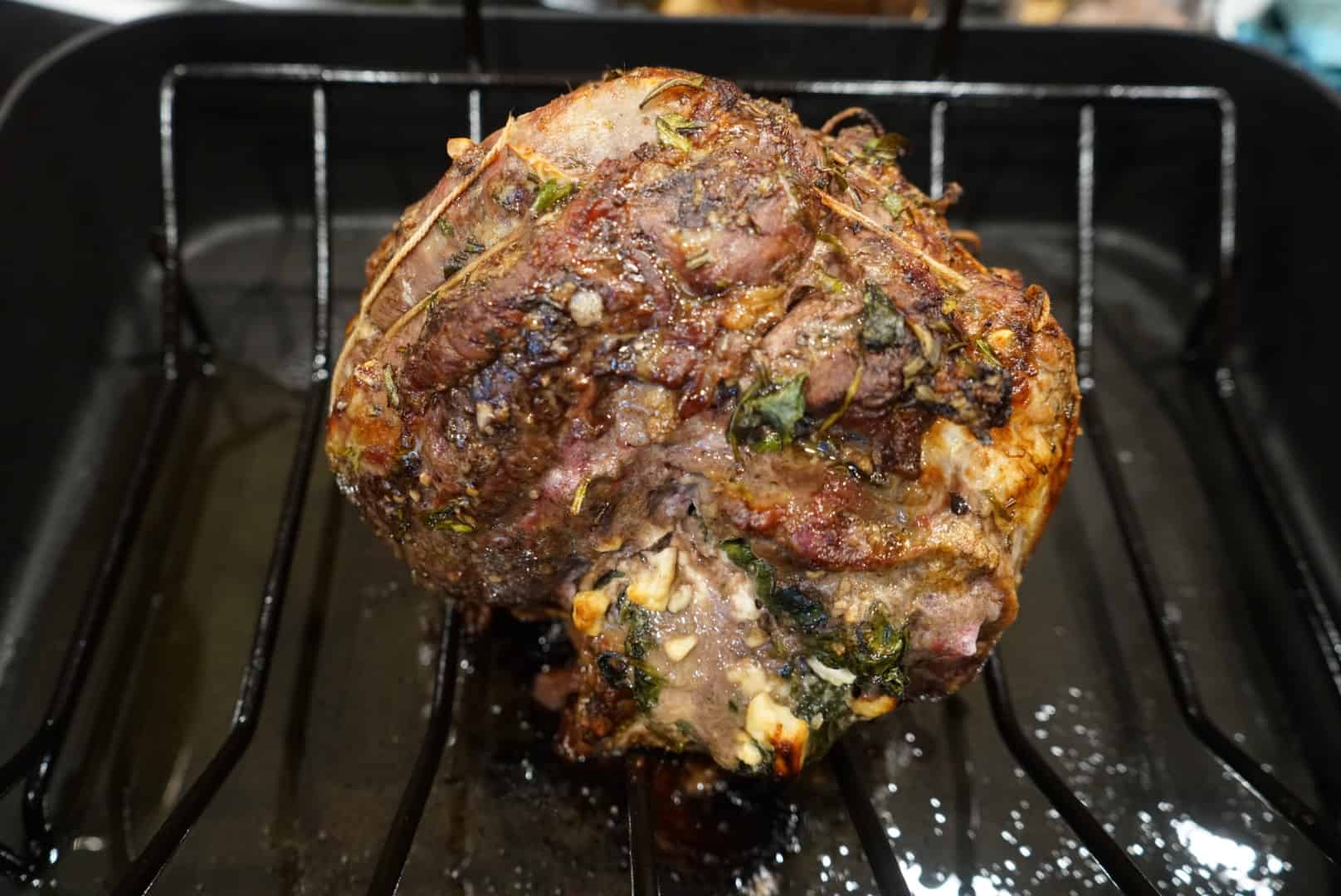
- Tie loops around the roast: Starting from the center of the rolled lamb, tie a loop of twine around the middle, pulling it tight enough to hold the roll together but not so tight that it cuts into the meat. Continue tying loops about 1-2 inches apart along the length of the roast. Make sure each tie is snug to keep the lamb securely rolled during cooking. You can also tie a piece lengthwise around the roll for extra security. Place it on a wire rack in a roasting pan or large baking sheet.


How long should I cook the lamb?
For this recipe, we’re starting the lamb roast at a higher temperature and then turning it down. This is a classic cooking technique that helps achieve a perfect balance between a well-browned exterior and a juicy, evenly cooked interior. Here’s why it works:
1. Searing the Outside
- Browning and crust development: Starting at a high temperature (typically around 425–450°F or 220–230°C) helps the surface of the lamb brown quickly. This caramelizes the natural sugars in the meat and creates a flavorful, crispy crust. The browning (or Maillard reaction) adds depth to the flavor and improves the overall texture of the roast.
2. Sealing in Juices
- The initial blast of heat helps to seal the surface of the meat, which can reduce moisture loss during the cooking process. While this doesn’t completely “seal in” all the juices, it does help form a protective crust that retains more moisture, resulting in tender and juicy meat.
3. Even Cooking at Lower Temperature
- After the initial browning phase, the oven temperature is reduced (usually to around 325–350°F or 160–175°C). This lower, steady heat ensures the inside of the lamb cooks gently and evenly. Slow roasting at a lower temperature prevents the outside from burning while allowing the inside to reach your desired doneness without drying out.
- Cooking the lamb more slowly at this point allows the heat to penetrate the center of the roast without overcooking the outer layers, ensuring a perfectly tender and juicy interior.
4. Better Control Over Doneness
- Starting high and then lowering the temperature gives you better control over the final doneness of the lamb. The higher heat allows for the quick development of a crust, while the lower heat allows the internal temperature to rise gradually, preventing the risk of overcooking.
5. Improves Texture
- The combination of high heat and lower heat promotes a tender texture by ensuring the lamb cooks more evenly throughout. It avoids the issue of the outer layers being overcooked and tough while the center is still underdone.
By using this two-step roasting technique, you get the best of both worlds: a beautifully browned, flavorful exterior and a moist, evenly cooked interior.
Remove the stuffed leg of lamb from the oven when it reaches an internal temperature 140 degrees using an instant read thermometer. Remove from the oven and let it rest for 30 minutes.

Why do you let the stuffed leg of lamb rest?
As lamb is cooked, the proteins in the meat heat up and set. The more cooked the meat, the more ‘set’ the proteins have become.
This is why we can judge a piece of meat’s doneness by prodding it with tongs – the firmer the meat, the more ‘done’ it is. When the proteins set they push the meat’s juices towards the centre of the meat.
Allowing the meat to stand away from the heat before serving allows the juices, which have been driven to the center of the meat to redistribute throughout the meat and be reabsorbed. As a result, the meat will loose less juice when you cut it and be far more tender and juicy to eat.
Additional Recipes to Try
These sides are perfect for this stuffed leg of lamb recipe
Green Bean Salad with Lemon Vinaigrette – Crispy green beans drizzled with a light lemon vinaigrette and tangy goat cheese crumbles is the perfect side dish!
Truffle Parmesan Hasselback Potatoes – the perfect crispy, garlicky side dish you need at your next holiday!
Air Fryer Greek French Fries – air fryer Greek french fries are crispy and delicious without using much oil!
Tried this recipe? Please leave a ⭐️⭐️⭐️⭐️⭐️ star rating below and/or a review in the comments section further down the page. You can also stay in touch with us through social media by following us on Instagram, Pinterest, and Facebook!
Print
Spinach and Feta Stuffed Roasted Leg of Lamb Recipe
- Prep Time: 20 minutes
- Cook Time: 1.5 hours
- Total Time: 9 hours
- Yield: 6-8 1x
Ingredients
1 (5 pound) boneless leg of lamb
For the marinade:
1/2 cup extra-virgin olive oil
2 teaspoons salt
1 teaspoon black pepper
2 tbl Rosemary, chopped
1 tbl thyme, chopped
4 garlic cloves, minced
Juice of one lemon
For the stuffing:
1 (10 oz) bag of fresh spinach leaves
8 oz feta
10 garlic cloves, peeled
Instructions
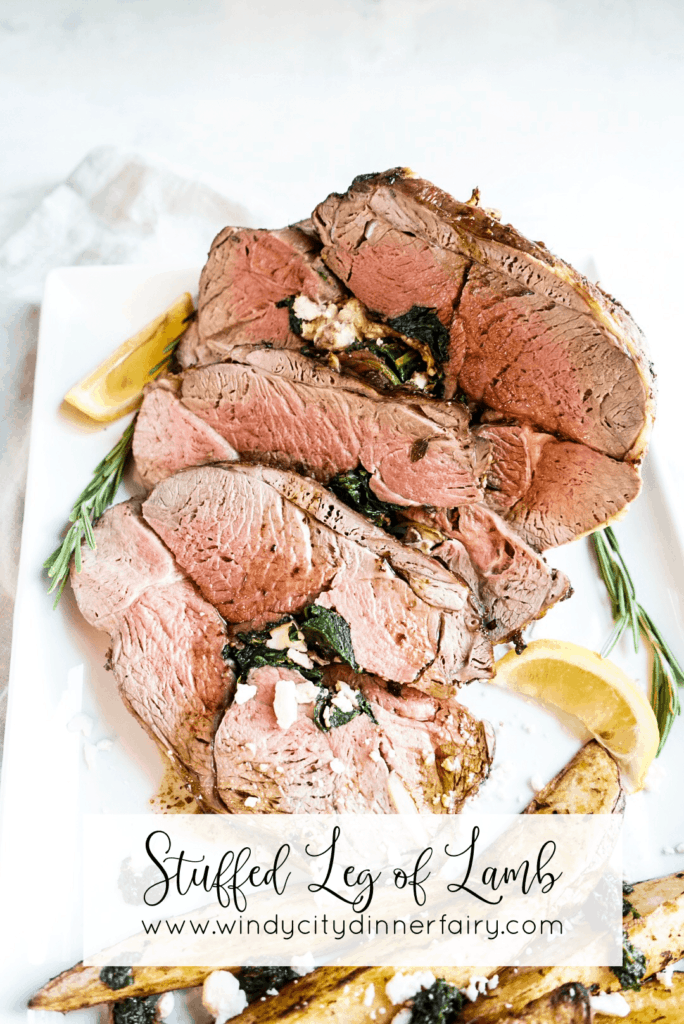
Want to pin this for later? Click on the image below!



2 Comments
About how long did it take you to finish the lamb when you turned it down to 350. I know you said to cook it until the internal is 140 but about how long did that take inquiring minds wanna know happy Easter thanks for the recipe
Cooking a 5-pound leg of lamb involves a two-step temperature process. Here’s a general guideline:
1. **Initial Cooking at High Temperature:**
Start cooking the lamb at a high temperature (often around 425°F) for 30 minutes. This helps to sear the outside, sealing in juices and creating a flavorful crust.
2. **Reduce Temperature and Continue Cooking:**
After the initial 30 minutes, reduce the oven temperature to 350°F. From this point, continue cooking the lamb at a rate of approximately 20 minutes per pound for medium-rare, up to 25 minutes per pound for medium.
Given your 5-pound leg of lamb:
– **Initial High Temp Time:** 30 minutes at 425°F.
– **Cooking Time at 350°F:**
For medium-rare: 5 pounds x 20 minutes = 100 minutes (1 hour and 40 minutes)
For medium: 5 pounds x 25 minutes = 125 minutes (2 hours and 5 minutes)
**Total Cooking Time:**
– Medium-rare: 30 minutes + 1 hour and 40 minutes = 2 hours and 10 minutes.
– Medium: 30 minutes + 2 hours and 5 minutes = 2 hours and 35 minutes.